
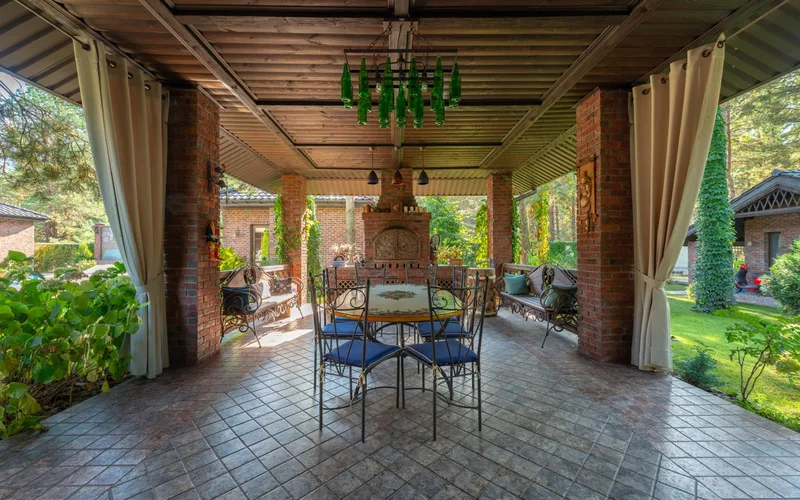
On a Chicago-area lot that already ponds, put the patio on a footprint that stays out of the existing flow path and leaves room for water to pass without heading toward the house. Compare two footprints before pricing either. The best spot for the table is not necessarily the best spot for the entire paved area.
How much paving do you need by the door?
Mark the space needed for seating and the route from the house before outlining the full patio. NC State Extension’s landscape design guide starts with intended activities and circulation. Try staking out a smaller footprint and a shifted one. Can someone open the door and pass behind an occupied chair without stepping into the wet area? A narrower seating area may leave the existing strip of lawn open without making the patio awkward to use.
Does either footprint cut across water already moving through the yard?
Walk both outlines after rain and mark where water enters, not just where it collects. Illinois Extension’s yard drainage guide explains how added hard surface, lost vegetation and changes in grade can alter ponding. Look uphill of the stakes: does a downspout or a bare bed feed water and sediment through the proposed seating area? Compare which outline leaves that route open. Even a permeable option needs room for overflow in an intense storm, as shown in the Federal Highway Administration’s permeable paver brief.
When should you move the outline or hold off?
Move or shrink the footprint if its low edge would send water back toward a wall or cut off the only visible way past the patio. At the house, check the slope of the soil itself, not the top of the mulch. Illinois Extension notes that foundation backfill can settle years later and that compaction depends partly on soil texture and moisture. If water already reaches a window well or neither outline leaves a plausible route, resolve that before choosing a patio size. A walk after rain helps rule out poor locations; it does not establish exact elevations or diagnose basement wetness.